 ... The Syntiac Pages ...
| Home Synthesizers FPGAs Games Software Hardware Pinball Tech | | ||
| |||
| |||
| Links Chameleon on iComp Wiki http://wiki.icomp.de/wiki/Chameleon Want to buy one? http://icomp.de/home/index_shop.htm Yahoo group chameleon_64 FPGA examples on github https://github.com/pwsoft/fpga_examples Individual Computers http://icomp.de | | ||
| |||
| ||||
Turbo Chameleon 64 |
||||
Multipurpose Commodore 64 expansion cartridgeAll user documentation and the latest firmware can now be found on the iComp Wiki pages.This project started somewhere in the beginning of 2006 after talking with Jens of Individual Computers. Initially it was called VGA-64, a simple cartrige with VGA connector for duplicating the VIC-II screen on a VGA monitor. However when you have a FPGA on a cartridge, "feature creep" kicks in as these chips are quite flexible (too much sometimes :-). So more possibilities and ideas for extensions came while the cartridge was in development. 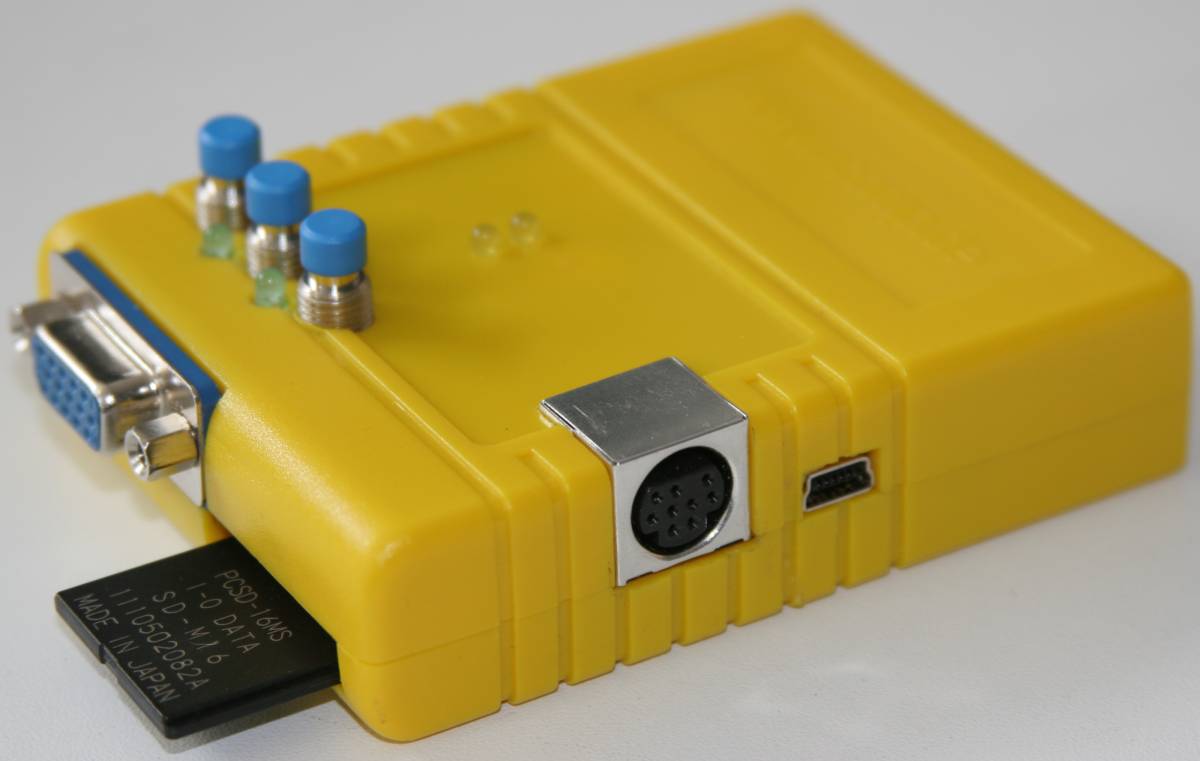
For additional information or questions visit the Individual Computers website or join the chameleon_64 mailing list. Also take a look on the Frequently Asked Questions page. The current feature list is as follows:
When in standalone mode:
Features still on the Wish List |
Latest Firmware and DocumentationAll user documentation and the latest firmware can now be found on the iComp Wiki pages.DocumentsChameleon cartridge overview picture Chameleon programmers manual (For BETA-9 firmware) Demos/ExamplesSome FPGA example project are now available on my github page. The link to the project is https://github.com/pwsoft/fpga_examples. chameleon_2600.zip, Atari 2600, VCS or Stella game system emulator (V0.9, updated on April 21th, 2013). chameleon_life.zip, Conway's Game of Life for the Chameleon. Complete hardware implementation (VHDL sources included). Born/alive rules can be changed by clicking buttons. Requires PS/2 mouse to operate. It is a very fast simulation as the design calculates complete lines (512 pixels) at the same time, but slower speeds are available as well. See here for a description how it works in detail Conway's game of life (on a FPGA). Hardware testchameleon_hwtest2.zip, second version of the hardware test for Chameleon (november 2011). This version contains production tests for both the Chameleon and the optional docking-station (VHDL source and documentation is included). chameleon_hwtest1.zip, first version of the production hardware test for Chameleon (february 2011). This is the contents of slot 1 when Chameleon is shipped (VHDL source and documentation is included). FPGA developmentChameleon FPGA core development (draft version 20130530), technical info for FPGA developers. chameleon_examples.zip, Example projects and VHDL files for supporting core development. chameleon_schematics.pdf, Chameleon production PCB board schematics. chameleon_fpga_pins.zip, a pin file that you can add to the Quartus *.qsf project settings file. cdtv_remote.zip, protocol description of the CDTV remote in open-office format. Special Test/Development Firmwarechameleon_v5_shiftmem.zip, Shifted SDRAM clocks from the original 180 to 150 and 210. For verifying stability issues. Project StatusThe Chameleon cartridge is available and can be ordered from http://icomp.de/home/index_shop.htm. The core, firmware and utilities are still in active development, so Chameleon is currently considered in beta status. This early release of the hardware will help to get feedback on required features and remaining bugs. Chameleon is software upgradable, so new firmware releases will be made available when issues are solved. Keep this in mind when ordering the product, there will be some bugs and missing functionality in the first firmware releases. 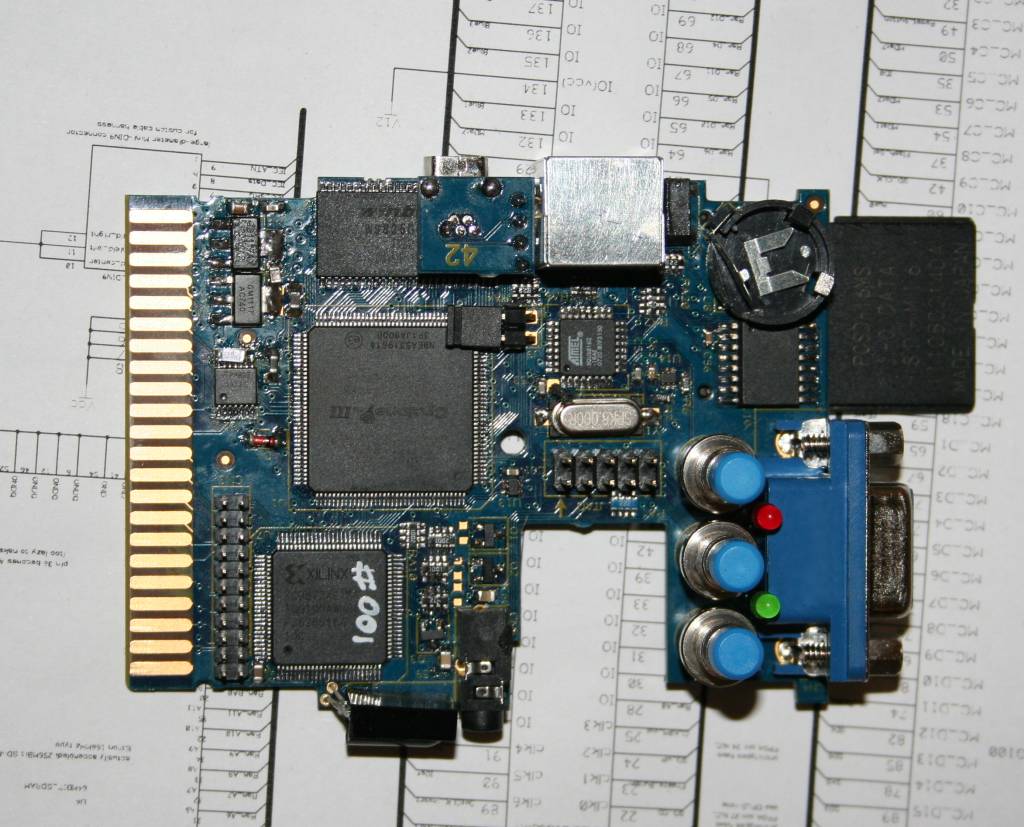
Docking-Station (optional)The Chameleon cartridge can also be used in "standalone" mode. All that is needed besides the cartridge is a USB power supply, a PS/2 keyboard and a VGA monitor to have a complete working system. However the Chameleon doesn't have any joystick connectors (as it was designed as a C64 cartridge where the C64 machine will provide the joystick ports). This limitation can now be solved by using the optional docking-station together with the Chameleon cartridge. 
(Picture shows a docking-station prototype) It provides 4 joystick ports and two keyboard connectors. One keyboard connector is for a C64 keyboard and the other for Amiga keyboards. The Chameleon has full control over the LEDs on the Amiga keyboard. All 4 joystick ports support a secondary fire button for extra flexibility. Actual support for the offered joystick features varies for each emulated machine. |
|||
